Graphene Transformative Applications Across Diverse Industries
In the global quest to reduce carbon emissions and transition towards more sustainable practices, a new player has emerged on the scene
GRAPHENE
TRANSFORMATIVE APPLICATIONS ACROSS DIVERSE INDUSTRIES
Graphene, renowned for its unique properties, offers transformative applications across a multitude of industries. Here’s an expert overview of the various uses for Graphene:
Electronics and Computing Transistors:
Transistors: Graphene-based transistors outperform traditional silicon transistors in speed and efficiency.
Flexible Electronics: Essential for developing bendable and foldable electronic devices.
Touchscreens: Used for durable, flexible, and highly conductive screens. Sensors: Highly sensitive for detecting gases, chemicals, and biomolecules.
Data Storage: Enables high-density, fastspeed memory devices.
Energy
Batteries: Enhances energy storage capacity and reduces charging times in lithium-ion batteries.
Supercapacitors: Offers high energy density and rapid charge/discharge cycles.
Solar Cells: Increases efficiency in photovoltaic cells.
Environmental
Water Filtration: Effectively removes contaminants from water.
Desalination: Efficient membranes convert seawater to freshwater.
Air Purification: Removes pollutants from the air.
Thermal Management
Heat Spreaders: Efficiently dissipates heat in electronic devices.
Thermal Interface Materials: Improves thermal conductivity for cooling systems.
Optoelectronics
Photodetectors: Provides high
sensitivity for cameras and sensors.
Light-Emitting Devices: Enhances performance in LED technology.
Automotive
Lubricants: Reduces friction and wear in engine parts.
Composite Materials: Creates lightweight and strong components for vehicle structures.
Fuel Cells: Improves catalysts for hydrogen production and storage.
Materials and Composites
Strengthening Agents: Adds to metals, plastics, and ceramics to enhance strength and durability.
Conductive Inks: Used in printed electronics and RFID tags.
Coatings: Provides anti-corrosion and protective coatings for various surfaces.
Lightweight Materials: Utilized in aerospace and automotive industries for weight reduction and fuel efficiency.
Biomedical
Drug Delivery: Facilitates targeted delivery systems for cancer treatment and other diseases.
Biosensors: Detects diseases and monitors health conditions.
Tissue Engineering: Serves as scaffolds for cell growth and tissue regeneration.
Antibacterial Materials: Used as coatings for medical devices and implants.
Biomedical
Drug Delivery: Facilitates targeted delivery systems for cancer treatment and other diseases.
Biosensors: Detects diseases and monitors health conditions.
Tissue Engineering: Serves as scaffolds for cell growth and tissue regeneration.
Antibacterial Materials: Used as coatings for medical devices and implants.
Aerospace
Structural Components: Produces lightweight and strong materials for aircraft.
Conductive Materials: Enhances
conductivity for electromagnetic shielding.
Telecommunications
Antennae: Enables high-frequency and efficient communication devices.
Optical Modulators: Enhances performance in fiber optic communication.
Textiles
Conductive Fabrics: Integrates sensors and circuits into smart textiles.
Protective Clothing: Increases durability and protection.
Sports Equipment
Lightweight and Strong Gear: Used in bicycles, tennis rackets, and other sports equipment.
GRAPHENE COST
ESTIMATES ACROSS
INDUSTRIES
(PER TON)
The cost of Graphene varies significantly based on its form (powder, flakes, sheets), quality (single-layer, few-layer, multi-layer), and industry-specific requirements. Below is a general cost estimate per ton for different industries:
1. Electronics and Computing:
High-Quality Graphene Sheets: $100,000 to $500,000 per ton Graphene Oxide: $50,000 to $200,000 per ton Graphene Nanoplatelets: $20,000 to $50,000 per ton
2. Energy:
Graphene for Batteries: $20,000 to $100,000 per ton Graphene for Supercapacitors: $50,000 to $200,000 per ton
3. Materials and Composites:
Graphene Powder (for composites): $10,000 to $50,000 per ton.
Graphene Nanoplatelets (for coatings): $20,000 to $100,000 per ton
4. Biomedical:
High-Purity Graphene Oxide: $100,000 to $300,000 per ton
Functionalized Graphene: $200,000 to $500,000 per ton
5. Environmental:
Graphene for Water Filtration: $20,000 to $50,000 per ton
Graphene for Air Purification: $30,000 to $100,000 per ton
6. Thermal Management:
Graphene for Heat Spreaders: $20,000 to $50,000 per ton
Graphene for Thermal Interface Materials: $30,000 to $100,000 per ton
7. Optoelectronics:
High-Quality Graphene Sheets (for photodetectors): $100,000 to $500,000 per ton
Graphene Oxide (for light-emitting devices): $50,000 to $200,000 per ton
8. Automotive:
Graphene for Lubricants: $10,000 to $30,000 per ton
Graphene for Composite Materials: $20,000 to $50,000 per ton
9. Aerospace:
Graphene Powder (for structural
components): $20,000 to $50,000 per ton
High-Quality Graphene Sheets (for conductive materials): $100,000 to $500,000 per ton
10. Telecommunications:
Graphene Powder (for structural
components): $20,000 to $50,000 per ton
High-Quality Graphene Sheets (for conductive materials): $100,000 to $500,000 per ton
11. Textiles:
Graphene for Conductive Fabrics: $20,000 to $50,000 per ton
Graphene for Protective Clothing: $30,000 to $100,000 per ton
12. Sports Equipment:
Graphene for Lightweight Gear: $10,000 to $30,000 per ton
Graphene for Strong Gear: $20,000 to $50,000 per ton
These approximate prices can vary based on supply chain dynamics, production scale, and technological advancements. The actual cost of Graphene for a specific application in a particular industry can also depend on the required purity, functionalization, and form factor.
REVOLUTIONIZING
GRAPHENE
PRODUCTION:
GEODYN’S GREEN
AND ECONOMICAL
APPROACH
In an era where sustainability and technological advancement must go hand in hand, Geodyn is pioneering a new paradigm in graphene production. By leveraging a unique blend of innovative techniques, we make graphene production cost-effective and environmentally friendly. Our integrated approach combines modern technology with a steadfast commitment to sustainability, ensuring that our Graphene is produced efficiently, economically, and with minimal environmental impact.
THE GEODYN
ADVANTAGE
1. Sustainable Sourcing of Raw Materials:
At Geodyn, our journey begins with a commitment to sustainability. We source our
carbon from agricultural, food, and plastic waste. By repurposing these materials,
we reduce environmental pollution and cut down on raw material costs. This innovative
use of waste materials ensures that our production process is both eco-friendly and economically viable.
2. Geodyn Solutions Microbial
Synthesis:
In a groundbreaking approach, we harness the power of microbes to convert organic waste into Graphene. This biotechnological method involves genetically engineered microbes that produce Graphene through their metabolic processes. This method is sustainable and offers a low-energy alternative to traditional graphene production techniques.
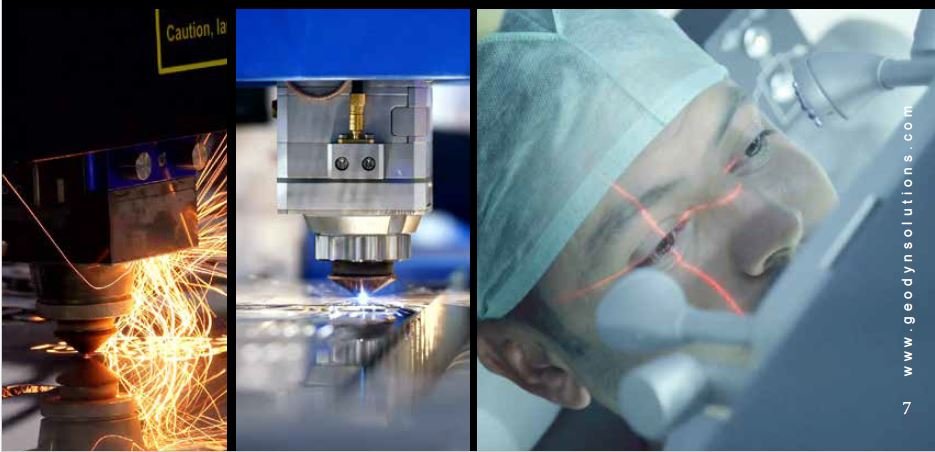
3. Geodyn Solutions Laser Scribing: Turning Waste into Graphene:
Our process starts with laser scribing, an advanced technique that converts waste materials into a preliminary form of Graphene. This highly efficient method operates at room temperature, making it both energy-efficient and environmentally benign. Using waste materials, we transform what was once considered trash into a valuable resource.
4. Geodyn Solutions Electrochemical Exfoliation: Efficient and Scalable.
The preliminary Graphene obtained from laser scribing is then processed using electrochemical exfoliation. This technique utilizes an electrical current to exfoliate graphite into graphene flakes. It’s a scalable method that operates at room temperature, reducing energy consumption and operational costs. Electrochemical exfoliation allows us to produce high-quality graphene flakes efficiently.
5. Geodyn Solutions Vapor Deposition (CVD): High-Quality Sheet Production.
We employ Chemical Vapor Deposition (CVD) for applications requiring highquality graphene sheets. We grow Graphene on substrates like copper using methane and other carbon-containing gases derived from biomass. This step ensures the production of large-area graphene sheets, essential for various industrial applications while maintaining our commitment to using renewable resources.
6. Geodyn Solutions Green Reduction of Graphene Oxide: Environmentally Friendly Refinement
Some of our Graphene undergoes conversion to graphene oxide (GO) for specific applications. We reduce GO to Graphene using green lowering agents such as vitamin C or plant extracts. This environmentally friendly approach avoids
harmful chemicals, aligning with our sustainability goals.
7. Geodyn Solutions Exfoliation in Water: Final Purification.
The final step in our process involves shear exfoliation in water. This method purifies and size-sorts the Graphene, ensuring consistent quality and properties. Shear exfoliation is a low-energy, scalable process that uses water as a safe solvent, minimizing our environmental footprint. By integrating these cutting-edge methods, Geodyn achieves a perfect balance of cost, scalability, and environmental impact.
Cost Efficiency: Using waste materials and low-energy processes significantly reduces
production costs, making Graphene more accessible to various industries.
Scalability: Combining scalable methods like microbial synthesis, electrochemical
exfoliation, and shear exfoliation ensures that our production process can meet growing market demands.
Environmental Impact: From sourcing raw materials to final purification, every step of our process is designed to minimize environmental harm. We utilize renewable resources and green technologies, setting a new standard for sustainable production.
The Future of Graphene
Geodyn is committed to leading the way
in sustainable graphene production. By continuously optimizing and integrating new technologies, we aim to make Graphene an affordable and eco-friendly material
for various applications. Our innovative approach benefits our customers and contributes to a healthier planet.
Join us in revolutionizing the future of materials science. Choose Geodyn for high-
quality, cost-effective, green, and sustainable Graphene. Together, we can build a better, more sustainable world.
For more information on our revolutionary graphene production process, visit our
website or contact us today.