MicrobeBio Dominican Republic Biotechnology and Agricultural Development Proposal
Proposed investment: US$10 billion | Implementation period: 2027-2036
MicrobeBio proposes establishing the Dominican Republic as a manufacturing, research, and export center for biotechnology applications that strengthen agriculture, improve resource efficiency, support food production, and create skilled employment.
The program would scale technologies through their mechanisms, modes of action, and demonstrated benefits, combining biological manufacturing with agricultural production, environmental services, and international projects.
The US$10 billion is a proposed investment envelope, including contingency. Funding would be released in stages against technical validation, commercial demand, applicable authorizations, and financing commitments.
1. Strategic objectives
The initiative would pursue five connected objectives:
- Build Dominican capacity to manufacture biological agricultural and environmental inputs.
- Improve crop performance through soil biology, root development, nutrient management, and integrated crop protection.
- Expand commercially viable agricultural, aquaculture, mushroom, and animal-production applications.
- Develop a skilled Dominican workforce in biotechnology, manufacturing, and agricultural services.
- Export biological technologies, technical expertise, and selected agricultural products.
The program would connect laboratory development with field performance. Technologies would advance to commercial scale when they demonstrate reliable production, acceptable safety, customer value, and sustainable economics.
2. Biotechnology mechanisms and benefits
Biotechnology platform | Mechanism and mode of action | Potential benefits |
Agricultural Biotechnology | Selected microorganisms transform organic materials, mobilize certain nutrients, and, where supported by the organism and crop system, contribute biological nitrogen fixation. | Improved nutrient availability and potential gains in nutrient-use efficiency and crop performance. |
Controlled Environment Agriculture | Protected structures, managed irrigation, climate control, and targeted nutrition regulate growing conditions. Biological management supports root and substrate health. | More consistent production, efficient resource use, and improved crop quality. |
Biotechnology platform | Mechanism and mode of action | Potential benefits |
Precision Nutrition | Formulation and delivery technologies manage nutrient solubility, placement, availability, and uptake. Any nanoscale applications undergo separate characterization and safety assessment. | More precise nutrient delivery and potential reductions in losses or unnecessary applications. |
Living Rhizosphere Technology | Beneficial organisms colonize the root zone. Mycorrhizal fungi form associations with compatible roots, while other organisms influence nutrient cycling and root-zone interactions. | Improved access to selected nutrients and water, with potential improvements in establishment and stress tolerance. |
Biological Crop Protection | Depending on the organism, activity can involve competition, antagonistic compounds, parasitism, insect infection, or stimulation of plant defenses. | Reduced pest or disease pressure as part of integrated management, subject to crop-specific validation. |
Aquaculture Biotechnology | Selected biological processes support organic-matter degradation and nutrient transformation under suitable water conditions. | Improved water-quality management and potential reductions in accumulated organic waste. |
Animal Health and Probiotics | Validated strains may influence intestinal microbial communities, compete with undesirable organisms, and support digestive function. | Potential improvements in feed utilization and production performance, depending on species and application. |
Environmental Biotechnology | Biological treatment processes degrade suitable organic pollutants and transform nutrients under controlled conditions. | Improved treatment performance and resource recovery where supported by system design. |
Mushroom Biotechnology | Fungal enzymes break down suitable lignocellulosic materials, supporting edible mushroom cultivation and substrate processing. | Food production, agricultural-residue utilization, and additional rural income. |
These benefits depend on strain selection, formulation, dose, environmental conditions, and management. They would be measured through controlled trials and commercial operating data.
3. Agricultural application model
The agricultural program would integrate biological technologies with soil analysis, balanced nutrition, irrigation, and conventional agronomic practices.
Nutrient cycling and availability
Microbial activity can help break down suitable organic materials and transform nutrients into forms available to plants. Certain organisms can mobilize phosphorus or other nutrients under appropriate conditions.
The program would assess whether these mechanisms improve crop nutrition and allow changes to fertilizer programs without compromising yield or soil fertility.
Root development and establishment
Beneficial root-zone interactions can influence root growth and nutrient acquisition. Mycorrhizal associations can extend the effective soil volume explored by compatible plants.
Potential benefits include stronger establishment and improved access to water and selected nutrients. Performance would be evaluated by crop, soil, and irrigation regime.
Soil structure and biological function
Roots, fungal networks, and microbial products can contribute to soil aggregation. Managed organic inputs can support biological activity and improve soil properties over time.
The program would measure aggregation, infiltration, organic matter, and root development rather than assume immediate soil restoration.
Integrated crop protection
Biological agents would be selected according to the target pest or pathogen and the demonstrated mode of action. Application timing, coverage, humidity, temperature, and compatibility would be incorporated into field programs.
The objective would be effective crop protection and improved crop economics. Changes to chemical applications would follow validated results and applicable requirements.
4. Manufacturing and quality assurance
MicrobeBio would develop modular facilities capable of producing consistent biological materials at commercial scale.
Core processes would include:
- Controlled bacterial fermentation.
- Separate fungal cultivation and processing.
- Dedicated production of root-associated symbiotic fungi.
- Stabilization, drying, blending, and liquid formulation.
- Packaging designed to preserve biological activity.
- Crop-specific granular formulation where technically suitable.
- Independent quality assurance and batch traceability.
Manufacturing controls would verify identity, viable counts where applicable, contamination limits, physical performance, and shelf life.
Saleable output would be defined by batches meeting specifications. Production volume alone would not demonstrate usable capacity.
Stability studies would address tropical storage and transport conditions. Manufacturing expansion would follow process validation and dependable demand.
5. Dominican agricultural projects
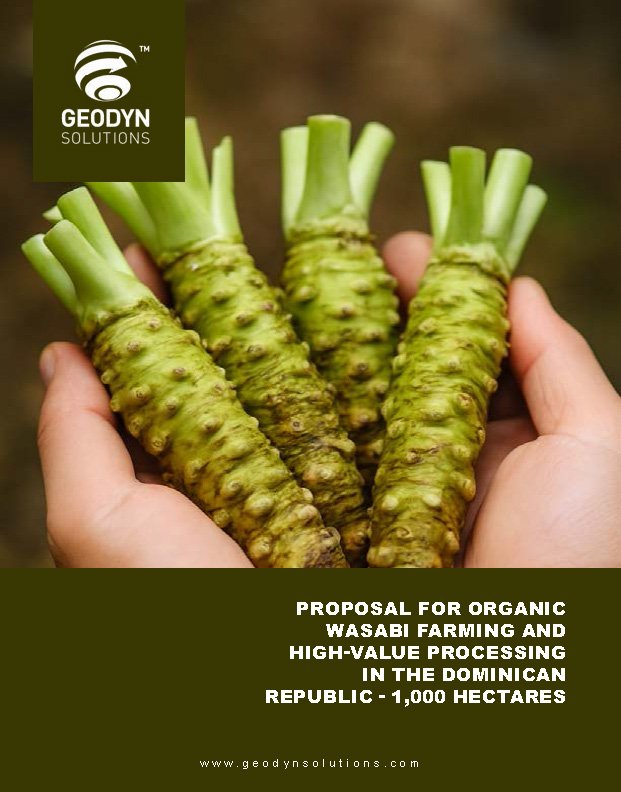
Initial projects would evaluate rice, bananas and plantains, cacao, coffee, vegetables, tropical fruit, and selected sugarcane applications.
Three deployment models would connect technical evidence with commercial adoption:
Model | Role |
Demonstration farms | Compare treatments, establish local evidence, and train technical staff |
Farmer partnerships | Deliver agronomic support and biological programs through clear commercial agreements |
Selected commercial projects | Integrate production, processing, and committed market access |
The primary performance measure would be farmer net margin per hectare, supported by yield, quality, input costs, water use, and buyer acceptance.
Farmer agreements would specify service costs, financing terms, purchasing arrangements, quality requirements, and payment schedules.
6. Environmental and circular-resource projects
Environmental investments would focus on applications with measurable treatment outcomes and dependable customers.
Wastewater treatment support: Biological processes would be evaluated for suitable organic loads, oxygen conditions, retention times, and operating environments. Benefits could include improved organic-load removal or treatment stability.
Organic-resource recovery: Suitable agricultural and food-processing residues would undergo controlled processing into useful materials. Feedstock testing, sanitation, contamination control, and product specifications would determine acceptable uses.
Soil remediation: Biological treatment would be evaluated against identified contaminants and site conditions. Success would require measured contaminant reduction and acceptable residual risks.
Biological treatment would be integrated with the engineering required for each system. Water reuse would require treatment and verification appropriate to its intended use.
7. Capital allocation
The proposed US$10 billion envelope includes approximately US$8.333 billion in base investment and US$1.667 billion in contingency, equivalent to 20% of the base program.
Investment component | US$ billion |
Biotechnology manufacturing and formulation | 1.800 |
Dominican agricultural projects and farmer partnerships | 1.650 |
Research, quality assurance, and authorization | 0.650 |
Controlled environment agriculture and nurseries | 0.500 |
Environmental biotechnology and resource recovery | 0.600 |
Aquaculture, animal applications, and mushrooms | 0.450 |
Investment component | US$ billion |
Utilities, logistics, storage, and processing | 0.900 |
International agricultural projects | 0.950 |
Workforce, extension, and digital systems | 0.300 |
Working capital and farmer finance | 0.350 |
Program preparation and management | 0.183 |
Base program | 8.333 |
Contingency | 1.667 |
Total | 10.000 |
These amounts are preliminary planning allocations. Facility capacities and project costs would be established through feasibility studies, engineering, and procurement.
8. International expansion
The Dominican platform would supply international markets through biological-input exports, technical services, training, licensing, and selected agricultural joint ventures.
International projects would require:
- Demonstrated local demand and suitable operating conditions.
- Applicable product and project authorizations.
- Reliable partners and clear land rights.
- Defined buyer arrangements.
- Acceptable currency, logistics, and security exposure.
- Project-level financial viability.
Overseas expansion would follow proven Dominican operations. Countries or projects that fail investment conditions could be replaced by qualified alternatives without interrupting the domestic program.
9. Deployment and financing
Phase | Timing | Base investment ceiling | Main deliverables |
Preparation and validation | Months 0-12 | US$0.200 billion | Feasibility, trials, sites, authorizations, and financing preparation |
Initial commercial operations | Years 1-3 | US$1.300 billion | First production modules and contracted agricultural programs |
Phase | Timing | Base investment ceiling | Main deliverables |
Dominican expansion | Years 3-6 | US$3.000 billion | Manufacturing growth and proven domestic projects |
International scale | Years 6-10 | US$3.833 billion | Export growth and qualified overseas investments |
Total base program | US$8.333 billion |
Financing would combine sponsor and strategic equity, institutional investment, project debt, equipment finance, partner capital, and eligible technical assistance.
Early research and validation would rely primarily on equity or suitable assistance. Debt would follow demonstrated repayment capacity. Funding sources would be treated as committed only after executed agreements.
10. Governance and measurable benefits
Separate operating businesses would manage manufacturing, agriculture, environmental services, and international projects.
Investment controls would include independent review, external audits, competitive procurement, project-level accounts, and defined intellectual-property rights.
The program would measure:
- Manufacturing consistency and cost per accepted batch.
- Farmer profitability and repeat adoption.
- Export margins and repeat orders.
- Permanent employment and completed technical training.
- Verified environmental-treatment outcomes.
- Operating cash flow and capital performance.
Government cooperation would focus on project coordination, applicable authorization processes, workforce development, research partnerships, and evaluation of eligible incentives. Public financial obligations would require separate approval.
Proposed partnership statement
“MicrobeBio proposes a US$10 billion biotechnology and agricultural development program centered in the Dominican Republic. The initiative would scale validated biological mechanisms that support nutrient cycling, root-zone function, integrated crop protection, resource recovery, and agricultural production.
Investment would proceed through separately approved projects supported by technical evidence, commercial demand, applicable authorizations, and financing. The intended benefits are stronger Dominican manufacturing capability, improved agricultural profitability, skilled employment, and sustainable international growth.”